The Best Mint Alternative in 2026 (No Bank Login Required)
Short answer: The most private Mint alternative is a spreadsheet-based tracker like Tolerable Finance. You import a bank CSV yourself instead of linking your bank, so your financial data stays in your own Google account. No login shared, no third-party server, and nothing to reconnect every few weeks.
When Intuit shut Mint down and pushed everyone toward Credit Karma, millions of people lost the one thing Mint actually did well: a simple place to see where their money went. And the hard part of replacing it has almost nothing to do with features. It comes down to how much access you’re willing to hand over to get them.
What happened to Mint?
Intuit discontinued Mint and moved its users to Credit Karma, which is a credit-monitoring product, not a budgeting tool. So former Mint users aren’t just switching apps, they’re deciding what kind of tool they want next, and how much of their financial life they’re comfortable handing over.
The one question that actually matters: do you have to link your bank?
Most budgeting apps work by connecting to your bank. That means giving a third party your login and a live feed of every transaction you make. It’s convenient, and it’s also the part that makes people uneasy and the part that goes wrong in a data breach.
So before comparing features, ask the question that actually separates your options:
| Approach | Bank login required? | Where your data lives |
|---|---|---|
| Auto-syncing budget apps | Yes | On a third-party server |
| A private spreadsheet tracker | No | In your own Google account |
If you’re leaving Mint because you’re tired of handing your financial life to someone else’s server, the second approach is the one to look at.
The private Mint alternative: a tracker that lives in your own sheet
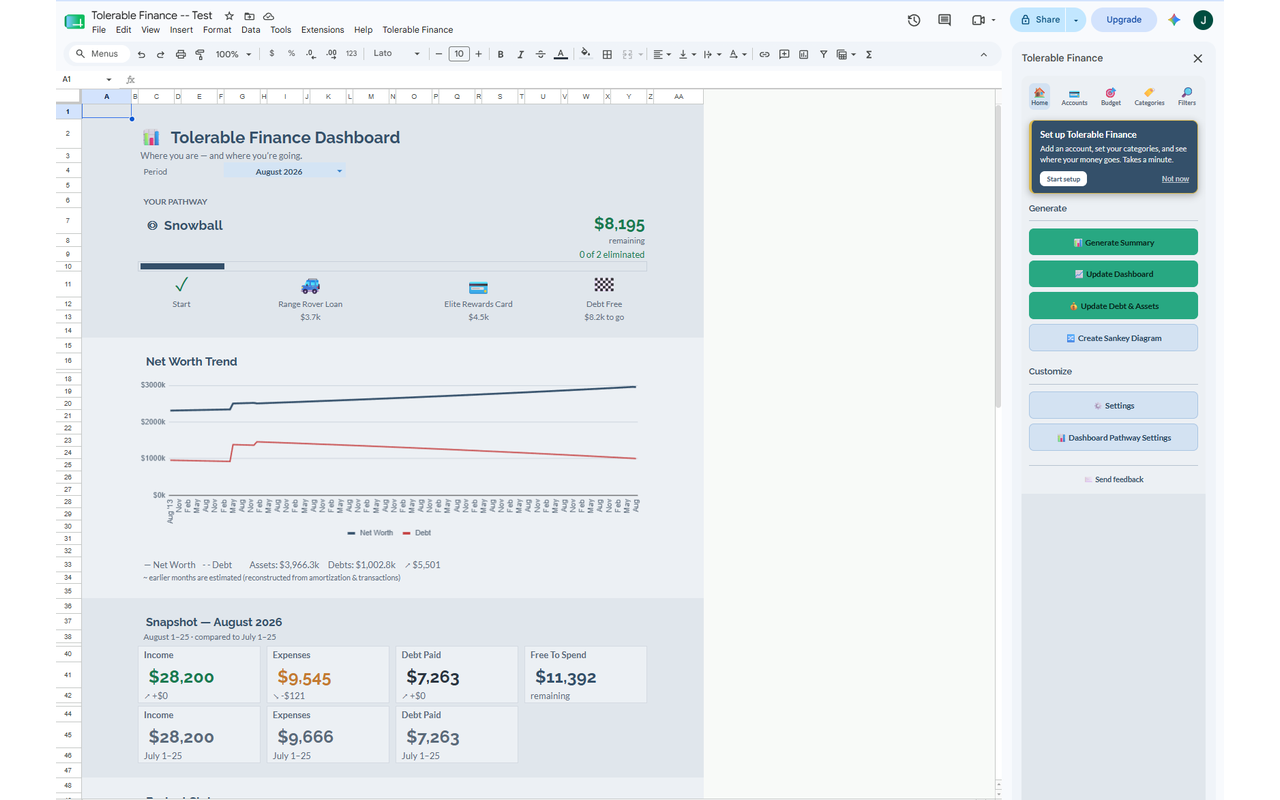
Tolerable Finance is a tracker built on the private approach. It runs inside your own Google Sheet. You export a CSV from your bank and import it yourself, so there’s no bank login and no server holding your money. It categorizes your transactions and builds the summaries, dashboards, net-worth tracking, and debt-payoff plans for you, so you get the “it just works” feel Mint had, without giving up ownership of your data.
A few things that make it a natural fit for Mint refugees:
- No bank connection to break. Anyone who used Mint remembers the endless “reconnect your account” prompts. A CSV import can’t disconnect.
- Your data never leaves your account. It lives in a spreadsheet you own. We never see it, store it, or sell it, because it never touches us.
- It’s free to start. The free tier covers importing, categorizing, and yearly summaries. Premium unlocks the dashboard, net worth, and payoff planning.
How to choose a Mint alternative
It comes down to what you actually want most. If real-time auto-sync is the thing you can’t live without, you’re going to be linking a bank somewhere, and that’s the trade you’re making. But if you’re here because you want your money tracked without handing over your login, a private spreadsheet tracker like Tolerable Finance is about the closest thing to Mint that still leaves your data in your hands.
The thing I’d want to know before committing to anything: when this tool has a bad day, who’s actually holding your data?
Frequently asked questions
Is there a Mint alternative that doesn’t require a bank login? Yes. Spreadsheet-based trackers let you import a CSV from your bank instead of linking it, so you never share your banking credentials. Tolerable Finance works this way.
What replaced Mint? Intuit moved Mint users to Credit Karma, a credit-monitoring product rather than a budgeting tool. That’s why most former Mint users choose a dedicated replacement instead.
Is there a free Mint alternative? Yes. Tolerable Finance has a free tier that covers importing your transactions, categorizing them, and generating yearly summaries.
Is it safe to link my bank to a budgeting app? Reputable apps use read-only connections, but you’re still sharing a live feed of your transactions with a third party. If that’s a dealbreaker, choose a tool that imports a CSV instead of linking your bank, so your credentials are never involved.